Jal Neti is one of the classical Shatkarmas (six cleansing techniques) described in Hatha Yoga Pradipika. It involves gently passing lukewarm saline water through one nostril and allowing it to flow out from the other.
Traditionally, Jal Neti was prescribed to purify the kapāla pradeśa (head region), remove Kapha-related impurities, and prepare the practitioner for pranayama and meditation. The text emphasizes that regular Neti practice enhances clarity of the senses and supports higher yogic practices.
Today, modern science also recognizes its value for respiratory hygiene, sinus drainage, allergy relief, and nasal mucosal health. This beautiful convergence of ancient yogic wisdom and contemporary physiology makes Jal Neti a powerful example of integrative health practice.
Requirements for Practicing Jal Neti
Before beginning Jal Neti, it’s important to prepare a few simple but essential items. Proper preparation ensures safety, comfort, and effectiveness.
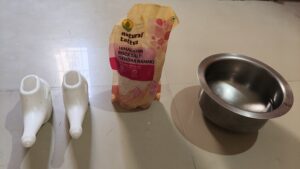
1. Neti Pot
Use a clean Neti pot (ceramic, stainless steel, or medical-grade plastic) with a smooth spout that fits comfortably into the nostril.
Keep it exclusively for nasal cleansing and wash it thoroughly after every use.
2. Lukewarm Water
The water should be clean (preferably boiled and cooled, or filtered)
Lukewarm — close to body temperature
Too hot can injure nasal mucosa; too cold may cause irritation or sinus discomfort.
3. Rock Salt (Non-iodized)
Add approximately ½ teaspoon of rock salt to 500 ml of water to create a mild saline solution.
Avoid iodized table salt or salt with anti-caking agents, as these may irritate the nasal lining.
4. Collection Bowl or Sink
Place a bowl under the face (or stand over a sink) to collect flowing water from nostrils and maintain hygiene.
5. Towel or Tissue for nasal drying
After Neti, keep a towel handy and always perform nasal drying using.
Procedure or How to Do?
Step 1 — Preparation of Saline Water
Take about 500 ml lukewarm clean water.Add ½ teaspoon non-iodized rock salt (shenda namak).
Stir until fully dissolved. The water should feel close to body temperature and slightly salty (like tears).
Step 2 — Get in Correct Position
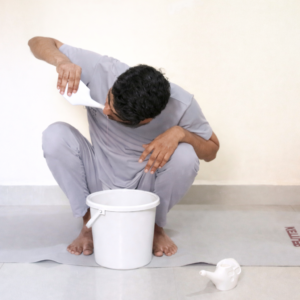
Get in Squat sitting position and Keep spine relaxed. Tilt the head forward and sideways so:
One nostril is higher, the other lower. Keep mouth slightly open and breathe gently through the mouth.
Step 3 — Insert the Neti Pot
Place the spout snugly into the upper nostril (no gaps). Do not sniff or inhale. Simply allow gravity to work. Water will start flowing out through the lower nostril. Remain relaxed.
Step 4 Continue Until Half the Water Is Used
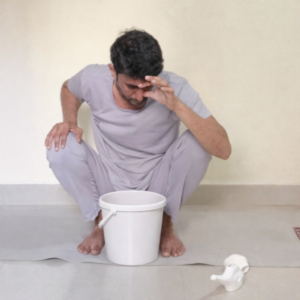
Let about half the pot flow through one side. Then Remove the pot, gently straighten up and switch head tilt. Repeat through the opposite nostril using the remaining water.
Step 5 — Nasal Drying (Essential Step)
After both sides are completed. Perform soft alternate exhalations through each nostril. If trained, add very mild Kapalbhati (10–20 strokes only).Do NOT blow forcefully. Drying removes residual water and prevents sinus heaviness.
Scientific Approach:
Why Salt? and Why Rock Salt? — Is Used in Jal Neti
Adding salt to water during Jal Neti is not traditional symbolism — it is physiological necessity.
1. Salt Makes the Solution Isotonic
Human nasal lining is comfortable with fluids close to 0.9% saline (similar to blood plasma).
When you add about ½ teaspoon salt in ~500 ml lukewarm water the solution becomes near-isotonic.
This prevents:
- Burning or stinging
- Swelling of nasal mucosa
- Drying of tissues
Plain water is hypotonic and pulls water out of cells → irritation.
Saline maintains cellular fluid balance.
2. Salt Retains Moisture & Protects Nasal Mucosa-Most Important
Salt ions (Na⁺ and Cl⁻) are hydrophilic (water-attracting).
They:
- Hold water around nasal cells
- Keep mucosa hydrated
- Support healthy ciliary movement
- Cilia need moisture to sweep mucus and debris outward (mucociliary clearance).
- Without salt → cilia slow down.
3. Salt Reduces Congestion by Osmosis
- Salt creates osmotic pressure, which:
- Draws excess fluid out of swollen tissues
- Reduces nasal edema
- Opens blocked passages naturally
That’s why saline irrigation gives fast relief in sinus congestion and allergies.
4. Salt Enhances Mechanical Cleansing
- Saline water Thins the thick mucus.
- It Loosens allergens. Flushes microbes and pollutants
- It does not “kill” germs chemically — it removes them mechanically, reducing infection load.
Benefits Scientifically and by yogic view
1. Nasal Cavity
- It Removes mucus, dust, allergens, microbes
- Improves airflow.
- Restores healthy mucociliary clearance and Hydrates nasal mucosa.
Yogic view
This is the entry gate of prana. Clearing it improves pranic flow and prepares the body for pranayama.
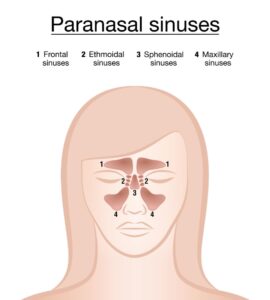
2. Paranasal Sinuses
(Frontal, Maxillary, Ethmoid, Sphenoid)
Scientific effect
- Drains stagnant sinus secretions
- Reduces sinus pressure and inflammation
- Helps prevent sinus infections
- Improves oxygen exchange
- Blocked sinuses are a common cause of headache and heaviness in the head — Jal Neti mechanically opens these drainage pathways.
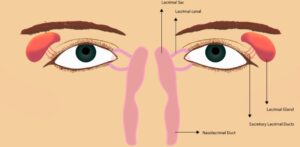
3. Eyes & Tear Duct (Nasolacrimal Connection)
The nose and eyes are connected through the nasolacrimal duct.
Effect
- Reduces eye irritation caused by nasal congestion
- Improves tear drainage
- Helpful in watery eyes and allergic irritation
- This is why many practitioners notice clearer, lighter eyes after Neti.
4. Head Region & Nervous System
Scientific angle
- Better nasal breathing improves oxygen delivery to the brain.
- Reduced heaviness or dullness.
- Many people feel an immediate “lightness in the head.”
Yogic angle
Jal Neti is said to cleanse kapala pradesha (head region), improving the Mental clarity and Alertness.
5. Upper Respiratory Tract
(Pharynx & Throat – indirect effect)
Though water does not directly enter the throat it reduces post-nasal drip and less throat irritation
Fewer upper respiratory infections. This happens because, infection load and mucus production decrease at the nasal level.
6. Energetic Channels (Yogic Perspective)
Traditional yoga explains that Jal Neti balances:
- Ida nadi (left nostril – calming)
- Pingala nadi (right nostril – activating
Contraindications & Precautions for Jal Neti
Although Jal Neti is generally safe when practiced correctly, it should be avoided or done only under expert guidance in the following conditions:
Absolute Contraindications (Do NOT practice)
- Active nose bleeding (epistaxis)
- Severe nasal blockage where water cannot pass freely
- Acute sinus infection with fever or thick yellow/green discharge
- Middle ear infection or severe ear pain
- Recent nasal or facial surgery
- Perforated eardrum
- Immediately after meals
Relative Contraindications (Practice only with guidance)
- During Chronic sinusitis (during acute flare)
- Deviated nasal septum (DNS) with poor flow
- Frequent ear infections
- Severe cold or flu
- Very sensitive nasal mucosa
- Vertigo or balance disorders
- Children (only under trained supervision)
Important Safety Notes
- Always use lukewarm isotonic saline (never plain water).
- Never blow forcefully after Neti — this can push water into sinuses or ears.
- Proper nasal drying is mandatory to prevent residual water retention.
- Stop immediately if you feel pain, dizziness, or pressure in ears.
- Beginners should learn from a qualified yoga therapist or teacher.